Lesson 10: Introduction to capacity/volume
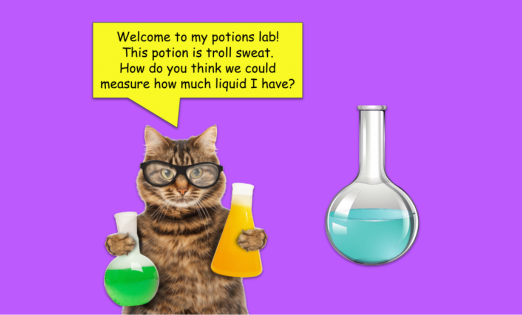
Students will read measuring cylinders and explore capacity/volume. They will convert between milliliters and liters using division and multiplication. Students will explore the capacity/volume of containers in your classroom using measuring cylinders.
Lesson 9: Applying area and perimeter
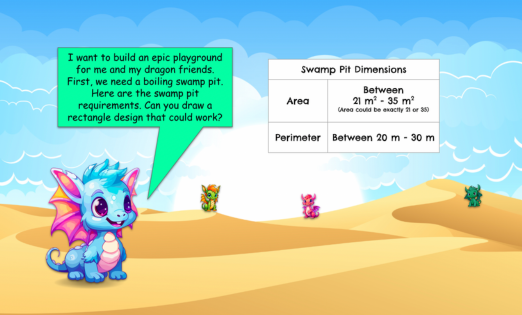
Students will combine their knowledge of perimeter and area to design a playground for the dragons.
Lesson 8: Calculating the area of compound shapes
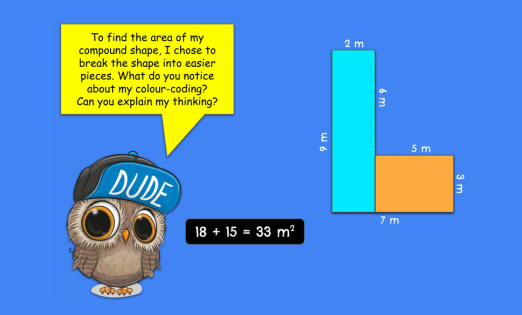
Students will use their knowledge of the formula for finding the area of rectangles to calculate the area of compound shapes.
Lesson 7: Calculating the area of rectangles
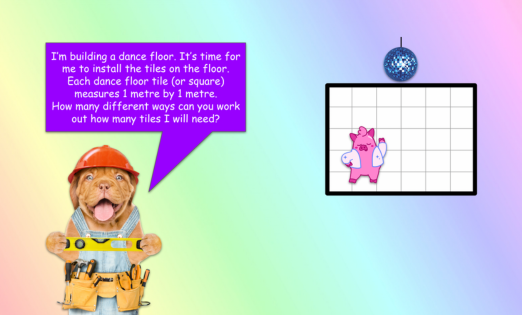
Students will explore the formula for finding the area of rectangles and apply it to creating dance floors with specific areas.
Lesson 6: Calculating perimeter using compound shapes
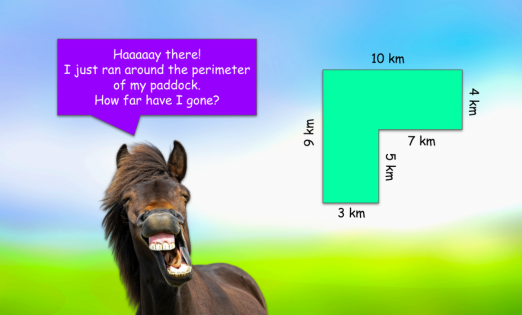
Students will find the perimeter of compound shapes with missing lengths. They will use their knowledge to calculate the perimeter of the animals’ paddocks.
Lesson 5: Calculating perimeter
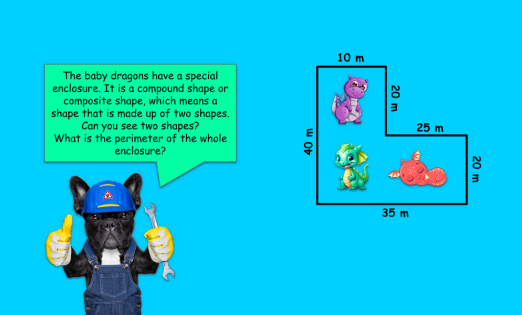
Students will explore finding the perimeter of 2D shapes, including compound shapes. They will calculate the perimeter of different enclosures for mythical creatures.
Lesson 4: Converting between mm, cm, m and km
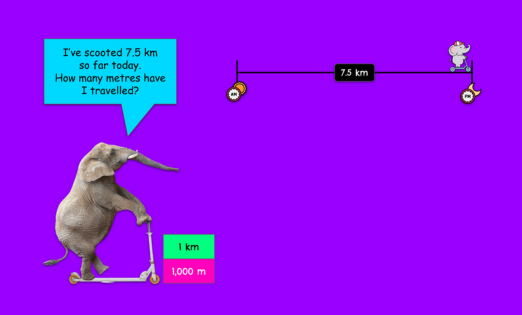
Students will convert between millimetres, centimetres, metres and kilometres. They will find the size of interesting animals with different units of measurement.
Lesson 3: Estimating and measuring length and distance
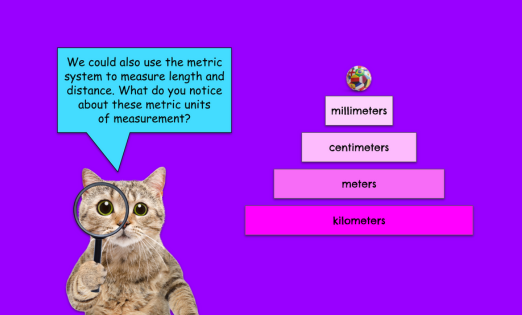
Students will estimate and measure inches, feet, centimeters and meters with accuracy. They will practice their skills by completing a series of challenges.
Lesson 2: Exploring and converting US standard units of measurement
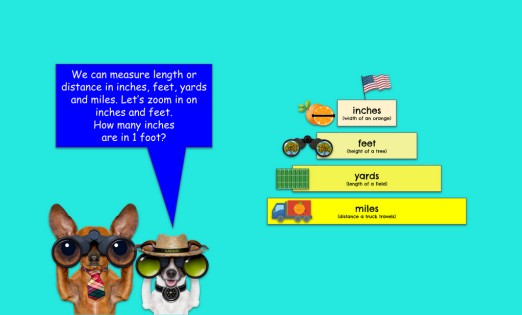
Students will explore and identify common uses for each unit of measurement. They will convert US standard units of measurement whilst playing the Conversion Challenge game.
Lesson 1: Identifying different types of measurement
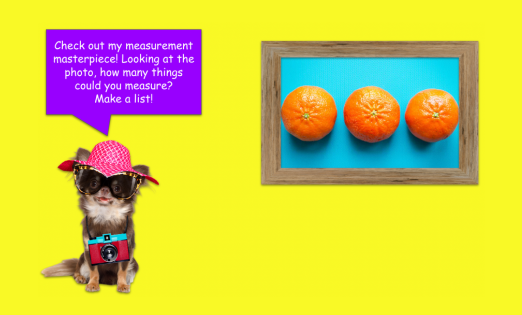
Students will explore different units of measurement and identify types of measurements in real-life situations.