
Lesson 7: Explore Split Strategy
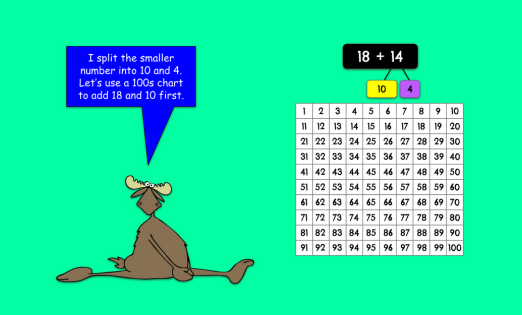
Split strategy involves splitting or expanding numbers into each place value amount to create an easier method to mentally add. It is also sometimes referred to as decomposition, partitioning or partial-sums strategy. Students will practice this strategy while playing Split ‘n Sketch, a creative game that involves finding the answers to questions, which will each […]
Lesson 6: Introduction to jump strategy
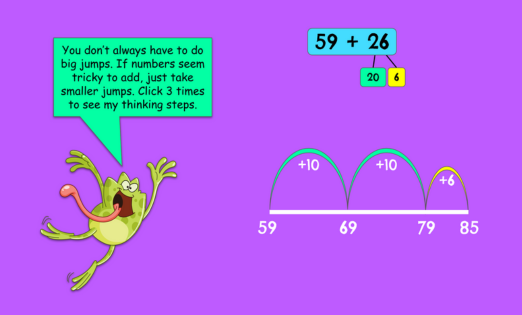
Jump strategy is a mental strategy used to manipulate and solve addition problems effectively. Students will break down a number into smaller chunks, then add each chunk to the larger number using a number line. This strategy helps provide a strong foundation for mental addition.
Lesson 5: Using doubles and near doubles
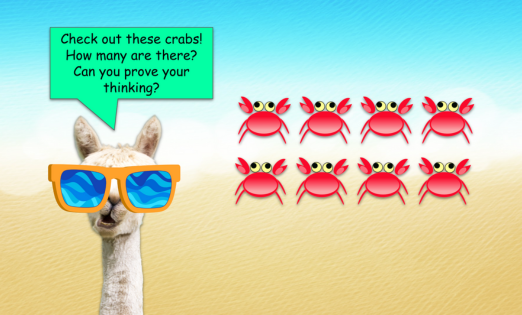
Students will manipulate doubles and ‘near doubles’ (numbers that are very close to each other) in order to develop their addition skills and gain more of an understanding of how numbers are flexible. They will practice adding doubles and near doubles by heading to a surf comp to help find each surfer’s score!
Lesson 4: Applying bridging through the next ten strategy
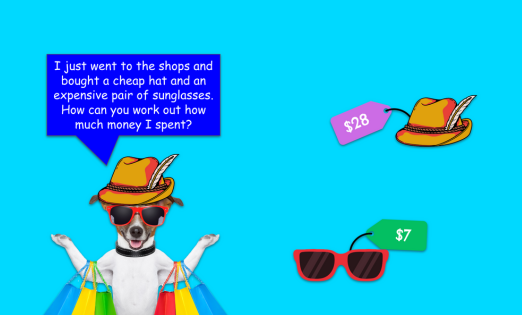
This lesson builds on the previous lesson, focusing on “bridging through the next ten” strategy. By mastering this approach, students will enhance their mental maths skills and strengthen their overall number sense. Students will practice their mental math skills by helping the animals figure out the total cost of the purchases after a day at […]
Lesson 3: Introduction to bridging through the next ten strategy
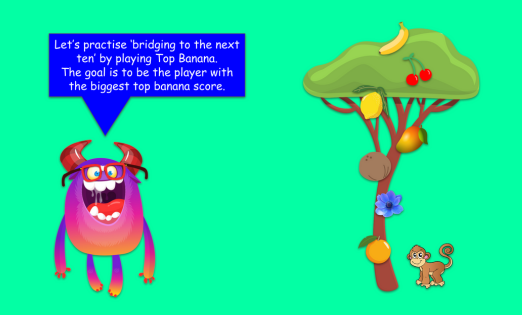
“Bridging through the next ten” is a strategy that builds upon the knowledge students gained in Lesson 2; finding the next multiple of ten. Bridging through the next ten involves adding a number in parts to another number to get to the next multiple of ten, then adding the remaining amount. This is a helpful […]
Lesson 2: Finding the next multiple of ten
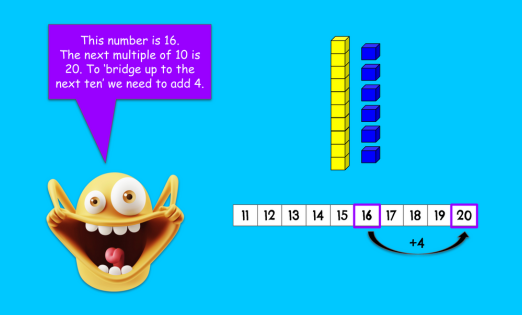
Students will explore how to add specific amounts to reach the next multiple of ten. This activity lays the groundwork for the “bridging to the next ten” strategy, which will be further developed in lessons 3 and 4. They will practice this strategy by creating number trees.
Lesson 1: Identifying number bonds
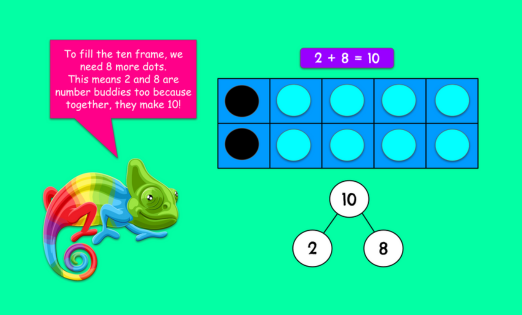
Students will recap and visually explore number bonds to 10 using ten frames and part-whole models.
Lesson 17: Place Value Assessment

This is a summative assessment that covers the key objectives from this place value unit.
Lesson 16: Solve Place Value Puzzles
Students will consolidate their place value knowledge and use critical thinking and problem-solving skills to complete number puzzles/riddles.
Lesson 15: Apply rounding to the nearest 100 skills
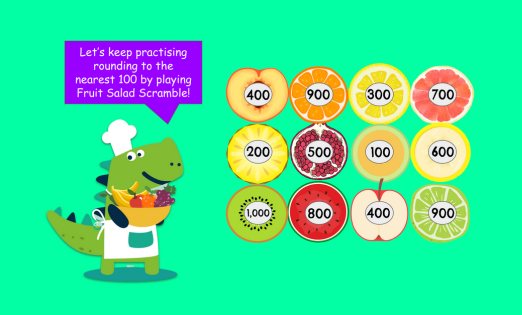
Students will apply their knowledge of rounding numbers to the nearest hundred to play a fun game called Fruit Salad Scramble.