
Have you ever noticed that people often talk about being “anxious” about math, but you rarely hear anyone say they have “reading anxiety” or “language anxiety”? Math seems to carry a special kind of fear for a lot of people, and not just kids. Plenty of adults still feel their stomach drop at the thought of a math problem.
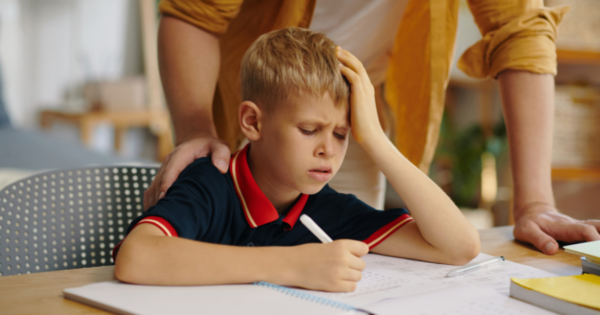
If your child gets tense, frustrated, or shuts down when it’s time to do math homework, you are not alone, and neither are they. The good news is that math anxiety is not a fixed trait. It is a learned response, which means it can be unlearned too. Here is what causes it, how to spot it, and what you can do at home to help your child build real confidence with numbers.
‘The difference between successful and unsuccessful students is less about the content they learn and more about their mindset.’ – Joe Boaler
Where Does Math Anxiety Come From?
Past experiences. Math anxiety often takes root in comments or moments from a child’s past, sometimes from years ago. Things like “girls just aren’t as good at math,” “you’re not a math person,” “this is easy, why can’t you get it?” or “just memorize the steps” can quietly plant seeds of self doubt. Over time, those seeds grow into real worry every time math comes up.
The way math was taught. Kids who are pushed toward memorizing formulas and taking frequent timed tests, without much room for exploring ideas visually or hands on, often feel more anxious than kids who get to discover math through play, pictures, and real world problems.
What’s happening at home and in the culture around us. Beliefs about who is “good at math” get passed down without anyone meaning to pass them down. If a parent grew up dreading math, that feeling can rub off on their child, even unintentionally. Cultural stereotypes about math ability can do the same thing.
Signs Your Child Might Be Struggling With Math Anxiety
- Physical signs: a racing heart, a tight chest, or sweating when it’s time to sit down and do math
- Mental signs: trouble focusing, going blank in the middle of a problem, or a running inner voice that says “I can’t do this”
- Behavioral signs: avoiding math homework, rushing just to be done, or claiming to be “bad at math” as a way of opting out
If any of this sounds familiar, know that noticing it early is a big step toward helping your child feel differently about math.
How You Can Help at Home
Celebrate mistakes as part of learning. One of the most powerful things you can say to a child is that mistakes are how we learn, not proof that they are not smart. When kids feel safe getting something wrong, they are far more willing to try, ask questions, and stick with a hard problem instead of giving up.
Talk about math together. You do not need to be a math expert to have a math conversation. Ask your child to explain how they solved a problem, or work through a real life problem together, like splitting a pizza bill or figuring out how long a car trip will take. Hearing their own reasoning out loud helps kids build confidence, and it shows them that math is something we think through together, not something we either “get” or don’t.
Make math visual and hands on. Not every child learns best through worksheets and flashcards. Building with blocks, drawing pictures, using measuring cups while cooking, or playing board games that involve counting and strategy can all reinforce math skills in a way that feels natural rather than stressful.
Focus on the thinking, not just the answer. Instead of asking “did you get it right?” try asking “how did you figure that out?” This shifts the focus from a single correct answer to the process of problem solving, which is where real understanding and enjoyment come from.
Watch your own math talk. If you catch yourself saying “I was always terrible at math” in front of your child, try to reframe it. Kids absorb these messages more than we realize. Even something as simple as “math wasn’t my favorite subject, but I got better at it with practice” sends a very different message.
The Bigger Picture
Math anxiety has real consequences. It can hold kids back not just in the classroom, but in how they see themselves and what they believe they’re capable of. The encouraging part is that once we understand where this anxiety comes from and how to recognize it, we can help children build a different relationship with math altogether, one built on curiosity, patience, and the belief that they can grow.
With a little support at home and an emphasis on effort over perfection, your child can learn to see math not as something to fear, but as something fun, creative, and deeply connected to everyday life.