Step 3: Start lesson 1 and have a look around
Students will use skip counting as a strategy to solve multiplication problems by counting forward in equal intervals. This approach helps them see multiplication as repeated addition and builds their number sense. They will practice this skill by playing a game called Island Capture.
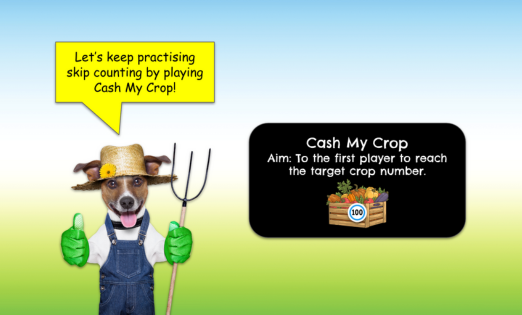
Students will apply their skip counting knowledge from the previous lesson with a strategy game called Cash My Crop.
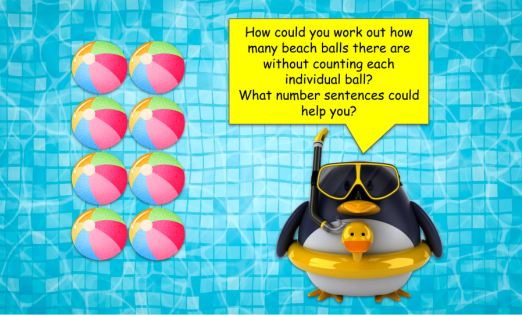
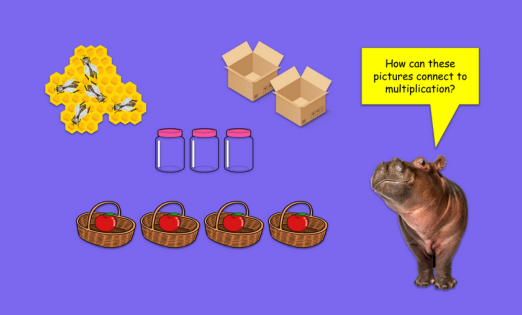
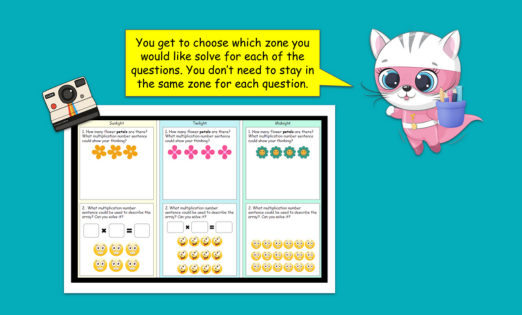
Students will play a game that involves drawing arrays to represent multiplication and addition number sentences. This activity will help them explore the connection between multiplication and repeated addition.
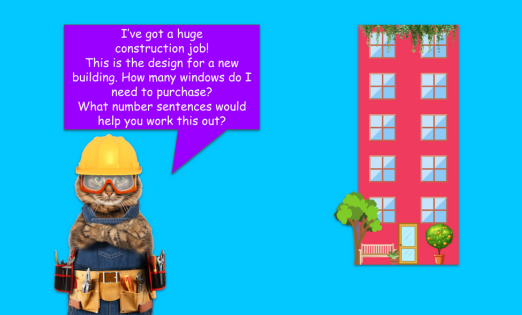
Students will create buildings that visually represent arrays, using rows and columns to show the organization of objects. This activity will help them explore the connection between arrays and multiplication.
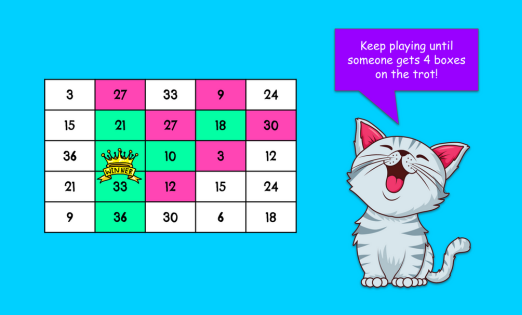
Students will develop a conceptual understanding of multiplying by 1 by recognising that the product remains the same as the original number. They will also explore multiplying by 0, discovering that the product is always zero regardless of the other factor. They will play a game of multiplication Bingo.
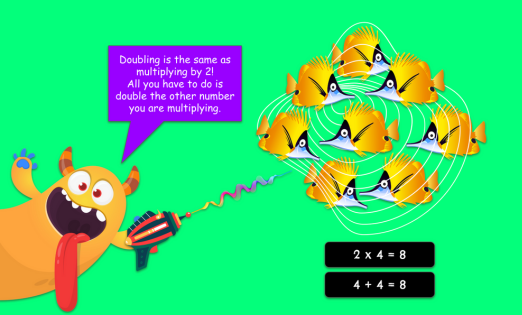
Students will use doubling to multiply by 2, recognising that multiplying by 2 is the same as adding a number to itself. This approach will help them build fluency and number sense. Students will practice this strategy by playing a game called Doubling Splat.
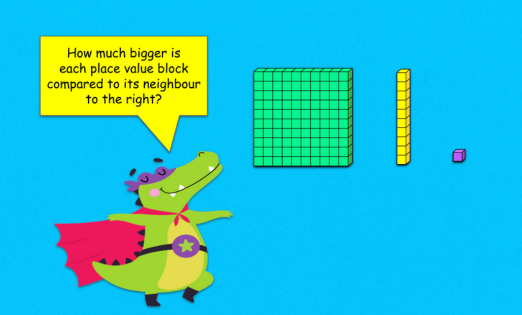
Students will revisit the connection between each place value column and use this information to begin to multiply by ten. They will do this by exploring what happens to digits when they become 10x larger. They will practice this strategy by comparing superhero powers.
Students will explore strategies for multiplying by 5, such as skip counting and using arrays. These methods will help them solve problems efficiently and build confidence in their multiplication skills. They will apply their knowledge by planning a party for 5 guests.
Students will explore strategies for multiplying by 3 effectively using skip counting or doubling and adding an extra group. They will practice these skills by playing a game called Cat Nap.
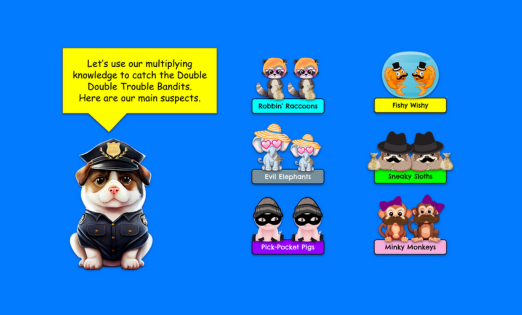
Students will explore strategies for multiplying by 4, such as using the ‘double, doubles’ method, where they double a number and then double it again. They will practice this technique whilst solving a mystery where they try to catch the ‘Double Double Trouble Bandits’.

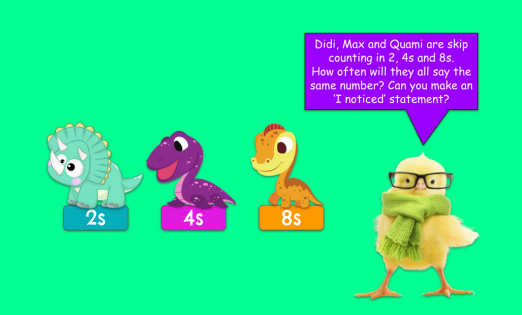
Students will explore strategies to effectively multiply by 8, such as doubling one factor 3 times or doubling the product of multiplying by 4. Students will practice multiplying by 8 by finding a pathway to a golden egg.
Students will apply their multiplication knowledge and the REPS strategy to solve word problems and crack a code to solve a joke
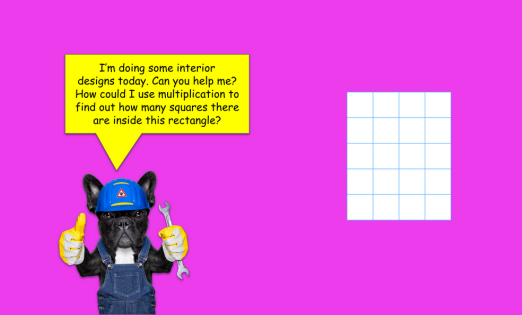
Students will apply and consolidate the multiplication skills, strategies and knowledge gained in this unit to design an epic room. They will apply multiplication to area. Please note, area will also be explored in more detail in our measurement unit.
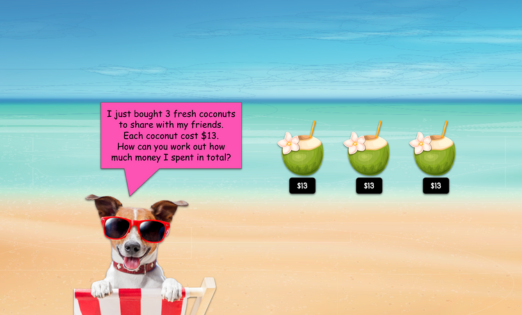
This lesson focuses on using place value dots/counters to multiply 2-digit numbers by 1-digit numbers. This strategy helps students visualise multiplication as repeated addition. Students will help animals calculate their beach spending totals.
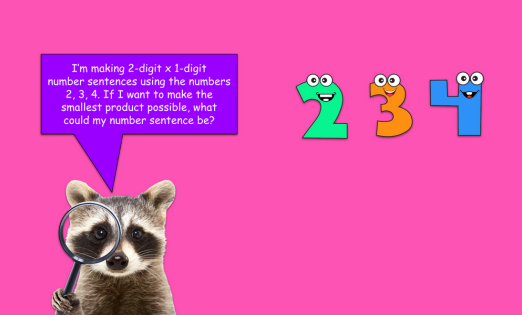
Students will continue to use place value dots/counters to multiply 2-digit numbers by 1-digit numbers. Students will create and solve 2-digit x 1-digit number sentences that match each challenge.