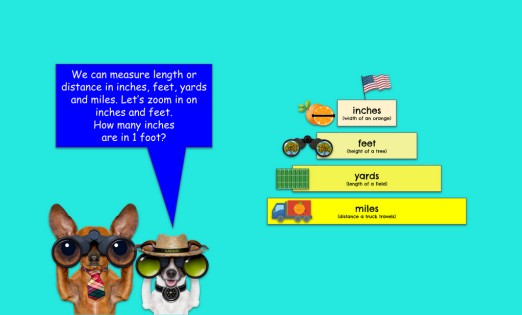
Students will explore and identify common uses for each unit of measurement. They will convert US standard units of measurement whilst playing the Conversion Challenge game.
Students will estimate and measure inches, feet, centimeters and meters with accuracy. They will practice their skills by completing a series of challenges.
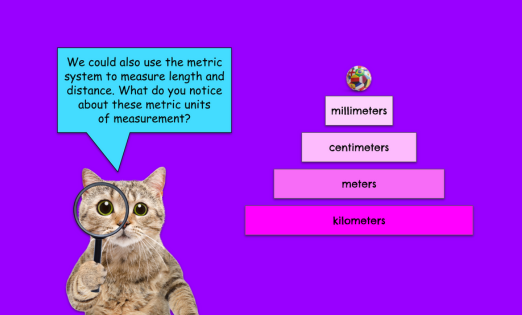
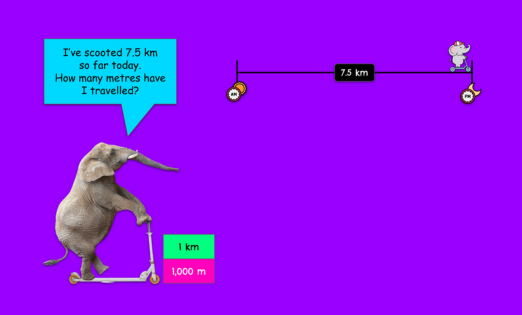
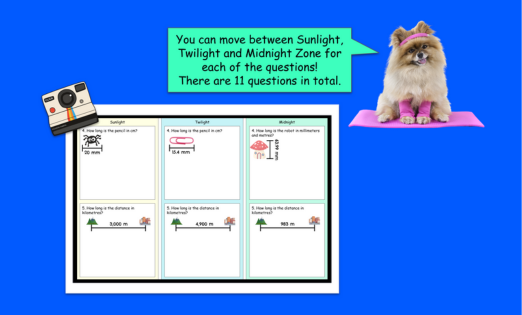
Students will convert between millimetres, centimetres, metres and kilometres. They will find the size of interesting animals with different units of measurement.
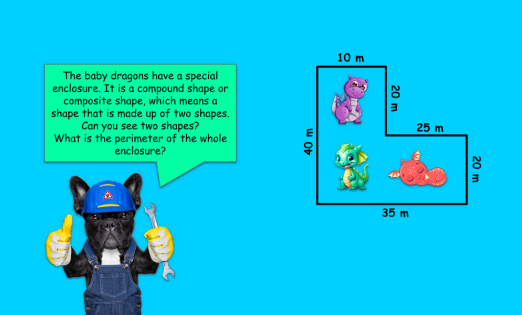
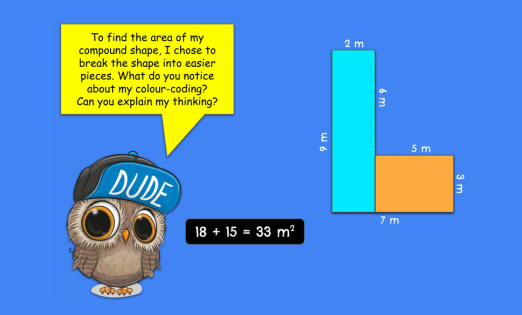
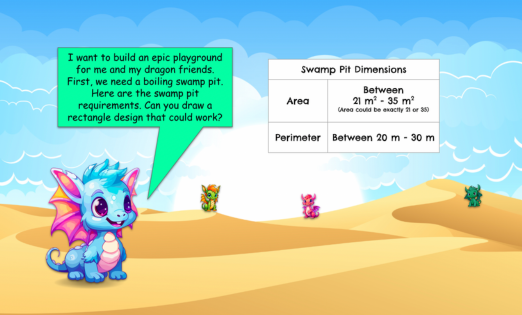
Students will explore finding the perimeter of 2D shapes, including compound shapes. They will calculate the perimeter of different enclosures for mythical creatures.
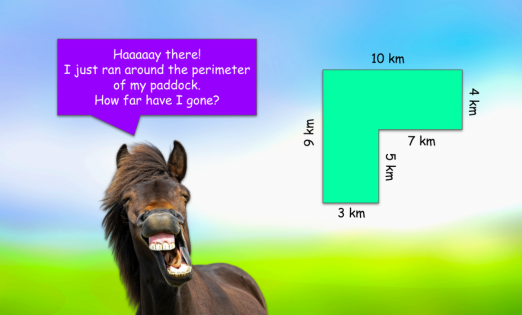
Students will find the perimeter of compound shapes with missing lengths. They will use their knowledge to calculate the perimeter of the animals’ paddocks.
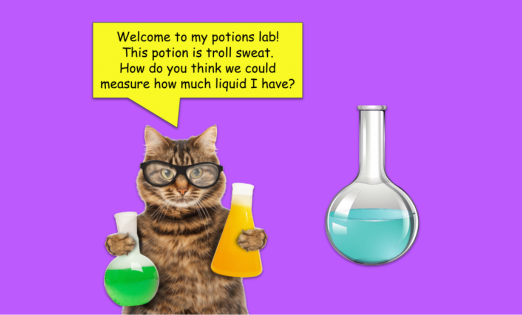
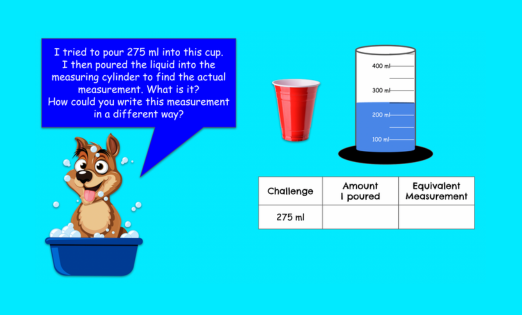
Students will read measuring cylinders and explore capacity/volume. They will convert between milliliters and liters using division and multiplication. Students will explore the capacity/volume of containers in your classroom using measuring cylinders.
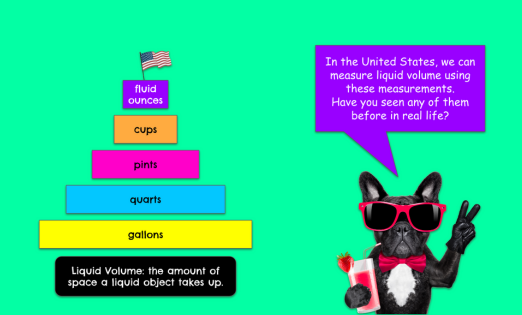
This lesson explores US liquid volume measurements, including gallons, quarts, pints, cups, and fluid ounces. Students will create a visual representation that shows the connection between the liquid volume measurements.
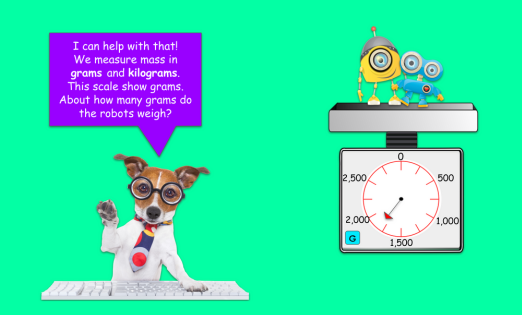
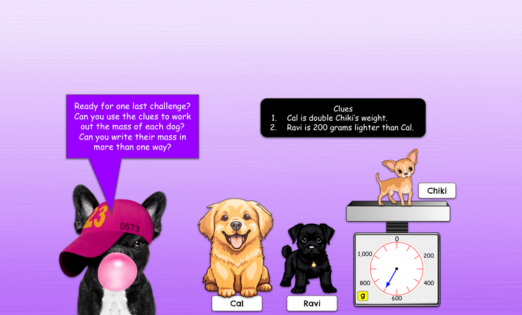
Students will read mass measurement scales and convert kilograms/grams and pounds/ounces using multiplication and division. They will explore mass by weighing objects in their classroom.
Students will use their problem-solving skills to add, subtract and convert between kilograms and grams. They will use these skills to organise items into different moving boxes.
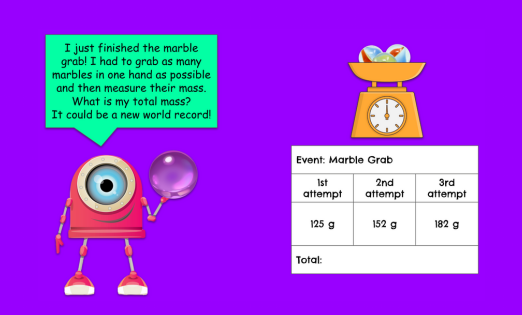
Students will recap and apply different units of measurement that they have explored during this unit. They will complete a Metric Olympics in this lesson.