
Lesson 8: Apply comparing fraction knowledge
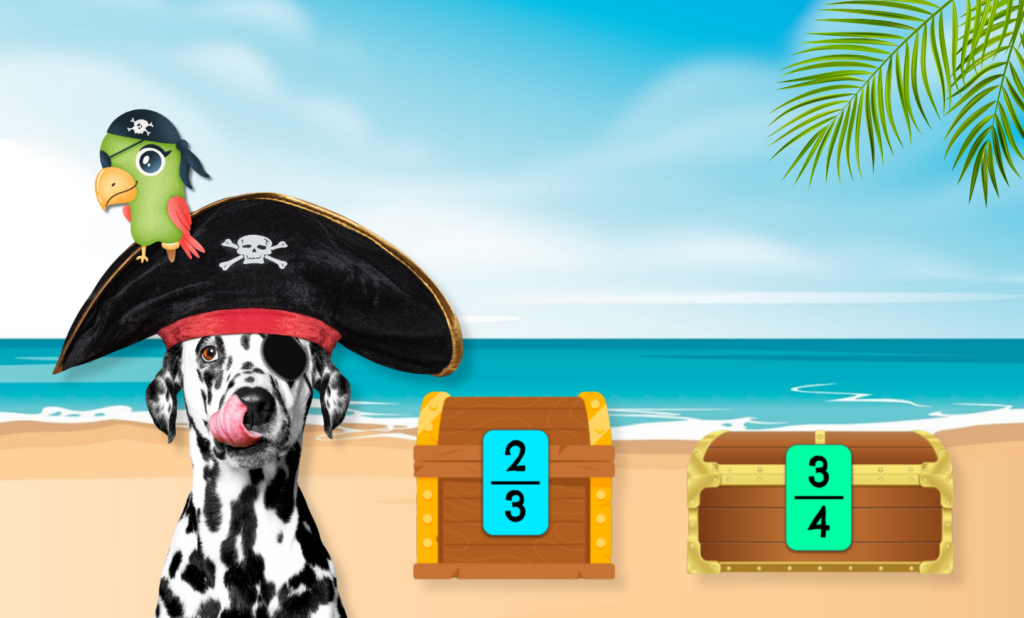
Students will continue to apply their knowledge of comparing fractions with a pirate-themed game called Up The Ranks.
Lesson 7: Comparing fractions
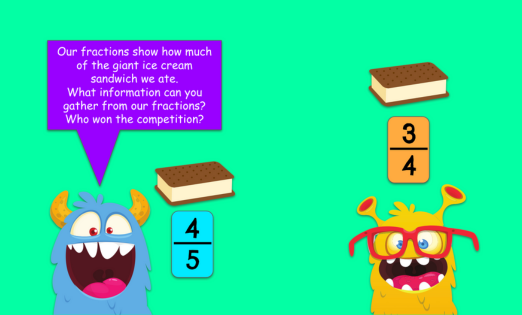
This lesson explores the concept of comparing fractions with unlike denominators using the lowest common multiples. They will compare fractions to find the winner of the Monster Munch Championships.
Lesson 6: Simplifying fractions
Students will use greatest common factors and visuals to explore how to simplify fractions. They will solve clues to identify the Fraction Foe.
Lesson 5: Introduction to simplifying fractions
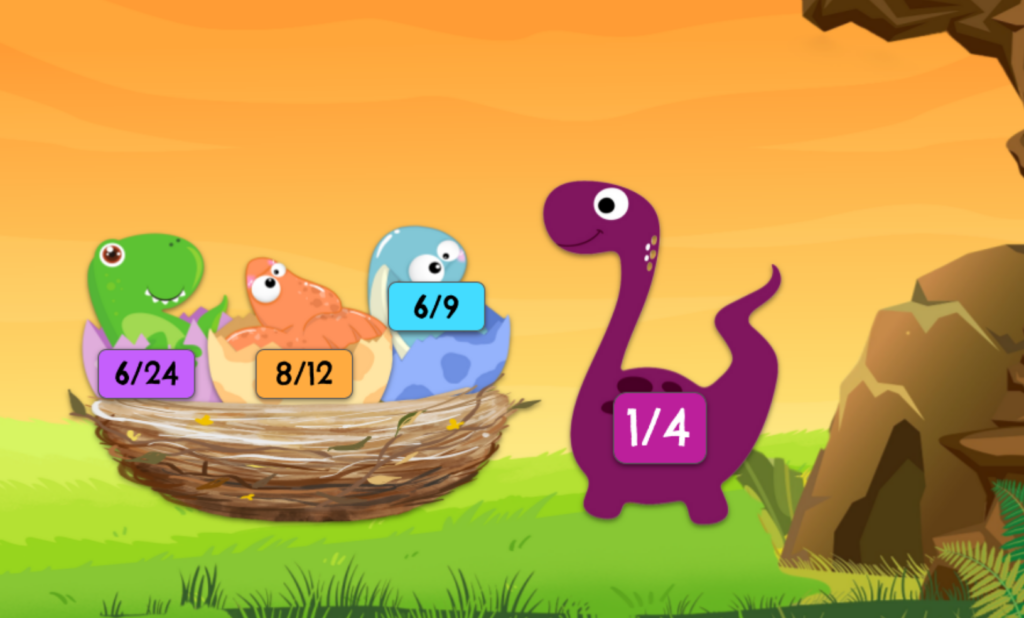
Students will learn how to simplify fractions using the greatest common factor. They will organise baby dinosaurs into dinosaur families.
Lesson 3: Creating equivalent fractions

Students will use visuals and multiplication to create equivalent fraction fishy friends.
Lesson 2: Exploring and identifying equivalent fraction
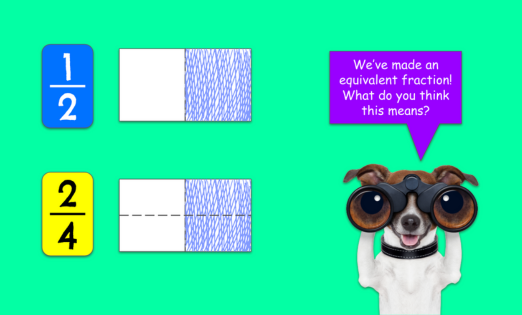
Students will use paper folds to conceptually explore equivalent fractions. They may also use multiplication to prove their thinking.
Lesson 1: Identifying fractions in real life
This lesson can be used as a pre-assessment. Students will recap fraction knowledge and identify fractions around the classroom.
Lesson 8: Statistics, Probability and Data Assessment
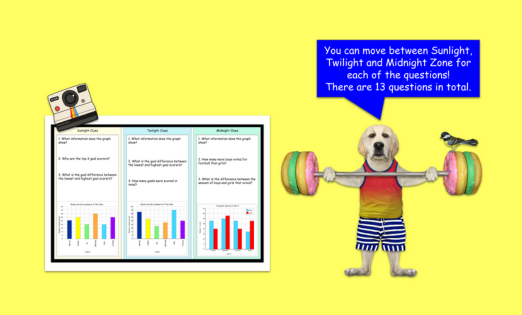
This is a summative assessment that covers the key objectives from this statistics, probability and data unit.
Lesson 7: Using probability to make predictions
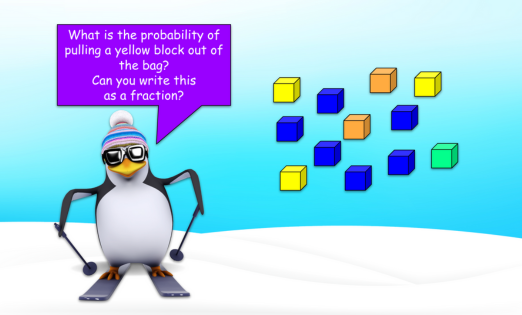
Students will play a game involving drawing coloured items out of a bag. They will use probability to make predictions while playing a game called The Colour Game.
Lesson 6: Introduction to chance and probability

This lesson introduces students to probability vocabulary, such as impossible, unlikely, even chance, likely and certain. They will order events depending on the probability of them occurring.